
What is Internet ?
The internet is a worldwide collection of networks that links million of businesses, government agencies, educational institutions, and individuals.
 |
| source : google image |
Advantages of Internet
- Accessibility
- Storage
- Online activity
 |
| source : google image |
Disadvantages of Internet
- Violation of privacy
- Public safety
- Health Risks
What is INTRANET ?
Intranet is an internal network that uses Internet technologies
What is EXTRANET ?
Extranet allows customers or suppliers to access part of its intranet.
TYPE OF CONNECTION & INTERNET CONNECTION
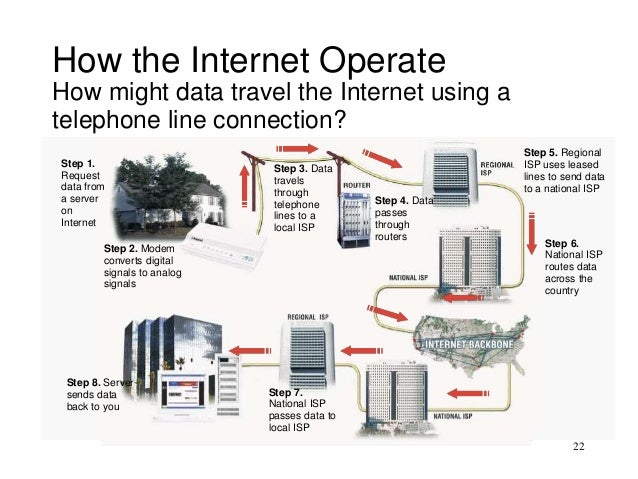
Dial Up
- PC has to dial via phone line to connect .
- Conventional dial up.

-ties up phone lines
-relatively secure from hackers
ADVANTAGES OF DIAL-UP CONNECTION
One of the benefits of dial-up service is that if you have a land line, all that you need is a dial-up account and the modem built into your computer to connect to the Internet. You don't need to have a special line installed or have a special DSL modem box. Furthermore, you can take your dial-up account with you and connect to the Internet anywhere there's a phone line you can access. This can be useful if you are frequently in areas where you cannot access high speed Internet services.
DISADVANTAGES OF DIAL-UP CONNECTION
The key disadvantage of dial-up Internet access is that it is slow. As of the date of publication, the fastest dial-up modems available have a maximum speed of 53 kilobits per second -- this equates to 0.053 megabits per second. Furthermore, when you're using dial-up service, your landline is tied up.
BROADBAND INTERNET CONNECTION
- Also refer to direct connection or always-on connections.
- Many home and small business users connect to the internet service
- PC is continually connected to the internet.
- used in home and office
Types of Broadband Connection
- DSL
- FIBER TO THE PREMISES (FTTP)
- FIXED WIRELESS
- CELLULAR RADIO NETWORK
- CABLE INTERNET SERVICE
- WI-FI
- SATELLITE INTERNET SERVICE
DSL
- DSL-Digital Subscriber Line
- Broadband delivered over telephone lines
> Must be less than 3 miles from a switching station
> Transmit over telephone lines but does not tie up the line
- Fast, direct Internet access via standard telephone line
- ADSL (asymmetric digital subscriber line) is one of the more popular types of DSLs.
DSL ADVANTAGES
 The key advantage of DSL is that it's fast. DSL line speeds are typically measured in megabits per second, giving you at least 20 times the speed of a dial-up connection. Furthermore, DSL connections are usually always on, meaning that you stay connected to the Internet all the time and don't have to reconnect every time you sit down at your computer. Finally, while DSL uses your existing phone wiring, it doesn't tie up your phone line. You can still place and receive calls while you're online. You can even have what's known as "naked DSL," which still uses the wiring in your home or office, but doesn't require you to have traditional land-line phone services.
DSL DISADVANTAGES
DSL has two major disadvantages. The first is that you need to buy a special connection from your phone company, pay a set up fee and either buy or rent a modem. The second is that you can't always get it. DSL only works when you are relatively close to the central office. Generally, you need to be within 18,000 feet, which is around 3.4 miles, from your telephone company. The farther away you are, the slower your DSL speeds can be, and the less likely it is that you'll be able to get DSL service at all sponsored links.
Fiber to the Premises (FTTP)
- Also known as Broadband over fibre (BoF)
- Delivers over fiber-optic cabling all the way to the building
- Uses fiber-optic cable
- Provide high-speed internet access to house and business users.
Fixed Wireless
 |
| Example of Fixed wireless |
- Uses radio transmission towers rather than satellites
- not available in all areas
- Providers high-speed internet connections using a dish-shaped antenna to communicate via radio signals.
Cellular radio network
 |
| source : google image |
- Also known as Mobile wireless.
- Access via mobiles phone or mobile device.
- Offers high-speed Internet connections to devices with built-in compatible technology or computers with wireless modems.
- Categories : 1G, 2G, 3G, 4G, 5G.
Cable Internet Service (Cable Modem)
- Cable : Most widely used home broadband connection
- Provides high-speed Internet access through the cable television network via a cable modem
- A new technology in Malaysia
Wi-Fi ( Wireless Fidelity )
- Data is transmitted through radio waves
- Public wireless networks
- Both free and fee-based are available
- Currently Wi-Fi for short range,but WiMAX may be an option
- Provie high-speed Internet connections to compatible or properly equipped wireless computers and devices
Wi-Fi Hotspot

- WiFi hotspot are places that provide a user with free or paid Internet services. Eg: Airport , Cafe, Hotel, hostel, Office and other public buildings.
0 comments:
Post a Comment